
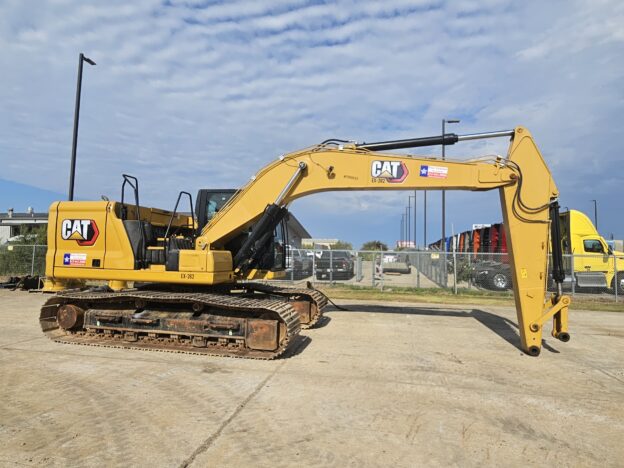
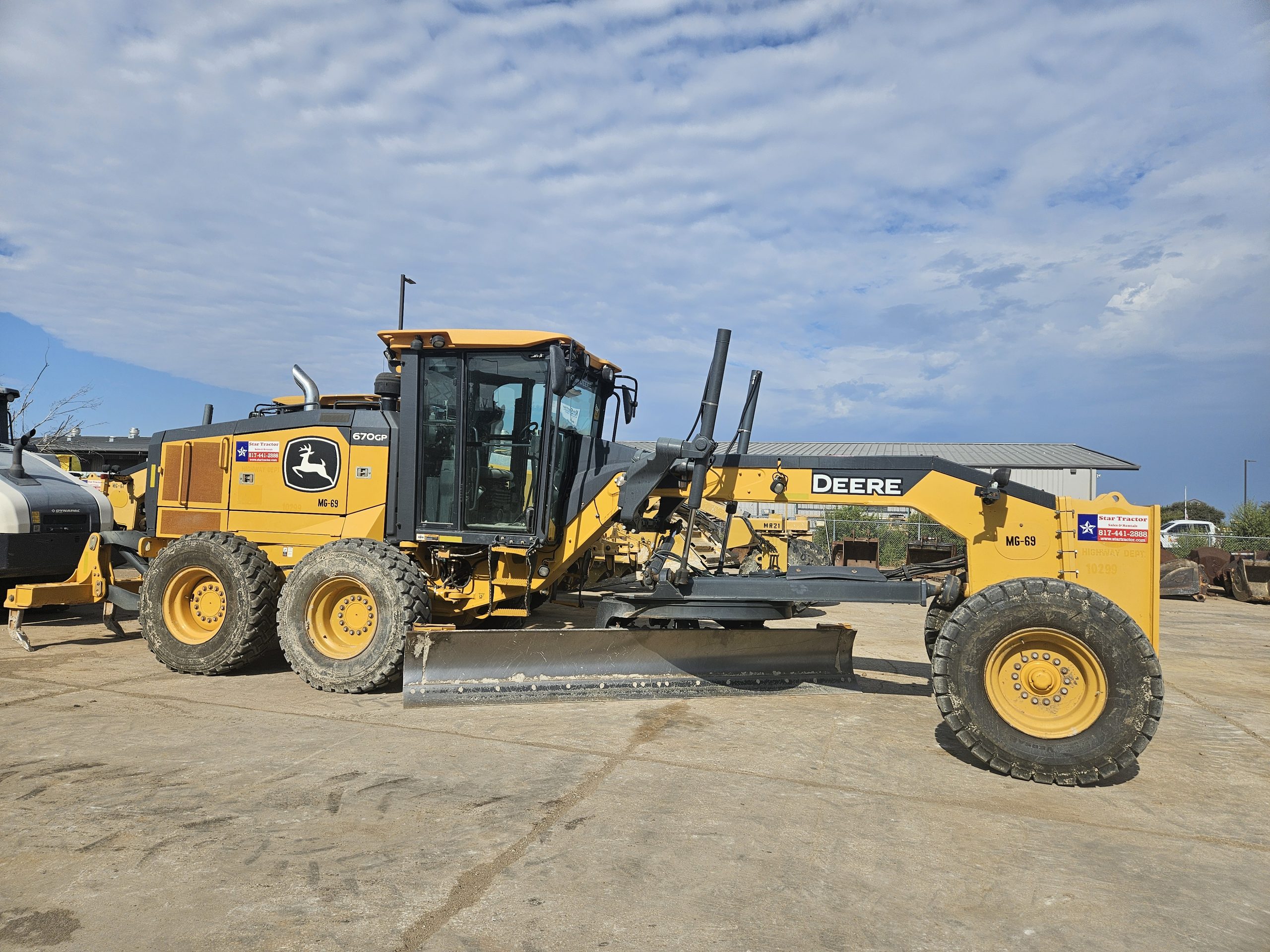
A Caterpillar 320 excavator and a Deere 670GP motor grader can both play important roles on a construction site, but they handle very different parts of the job.
The Cat 320 performs the digging and material-handling work. The Deere 670GP shapes the surface and brings the project closer to the required grade. Depending on the work, a contractor may need one machine—or both.
Here is a practical look at where each machine fits and what DFW contractors should consider before renting or buying equipment.
What Is a Caterpillar 320 Excavator Used For?
The Caterpillar 320 is a crawler excavator commonly used for excavation, utility work, site development and material handling. Its tracks allow it to work on rough or uneven ground while the boom, stick and bucket handle digging and loading operations.
Common Cat 320 applications include:
- Digging foundations and building pads
- Cutting trenches for water, sewer and utility lines
- Loading dirt or demolition material into trucks
- Removing unsuitable material
- Excavating drainage structures and retention areas
- Clearing and preparing construction sites
- General earthmoving and demolition work
For contractors who need to dig below grade, move material from a fixed position or load trucks, an excavator is usually the right starting point.
What Is a Deere 670GP Motor Grader Used For?
The Deere 670GP motor grader is built for shaping, spreading and finishing material. It can establish slopes, crown roads and produce a smoother, more accurate surface after the heavier excavation work has been completed.
Common Deere 670GP applications include:
- Building and maintaining roads
- Finish-grading commercial and industrial sites
- Shaping building pads
- Maintaining jobsite and haul roads
- Spreading and leveling base material
- Cutting drainage slopes and ditches
- Preparing surfaces for paving or concrete
The “GP” designation identifies Deere’s Grade Pro configuration. Actual installed grade-control equipment can vary by machine, so contractors should always confirm the specific configuration before renting or purchasing.
The Main Difference Between an Excavator and a Motor Grader
The simplest way to separate these machines is to look at the work they perform.
The Caterpillar 320 excavator digs, removes and loads material. The Deere 670GP motor grader shapes, spreads and finishes it.
An excavator can cut a trench or remove unwanted soil, but it is not designed to produce the same broad, controlled finish as a motor grader. A grader can move and shape loose material across a surface, but it is not intended to perform deep excavation or efficiently load trucks.
Choosing the wrong machine can reduce production, increase operating time and make it harder to achieve the required result.
When a Project May Need Both Machines
Many earthmoving and site-development projects require an excavator and a motor grader at different stages.
For example, the Cat 320 may first be used to:
- Excavate utilities
- Remove unsuitable soil
- Dig drainage areas
- Load excess material into articulated trucks
The Deere 670GP can then be used to:
- Spread replacement material
- Shape the subgrade
- Build slopes and drainage
- Maintain access roads
- Prepare the surface for the next construction phase
This combination can be useful on roadwork, commercial site development, utility projects, subdivisions and large building-pad jobs throughout the Dallas-Fort Worth area.
Questions to Ask Before Choosing a Machine
Before deciding what equipment belongs on the job, consider these questions:
Does the work require digging below grade?
If the project involves trenches, foundations, drainage structures or removing deep material, the Cat 320 will likely be the better choice.
Does the surface need to be shaped or finished?
If the goal is to establish elevation, create a road crown, shape a pad or prepare a smooth surface, the Deere 670GP is likely the more appropriate machine.
Will material need to be loaded into trucks?
An excavator is built to dig and load material. If dirt must be removed from the site, consider the entire production setup—including the excavator, trucks and disposal location.
What type of material is on the job?
Soil conditions affect machine selection and production. Wet ground, rock, compacted material and loose fill can each require a different approach.
How much work must be completed?
A machine should fit the size, schedule and production requirements of the project. The right equipment is not simply the largest available machine—it is the machine that can perform the work efficiently.
Do you need the machine temporarily?
If the equipment is needed for one project, a specific phase or a temporary increase in workload, renting may make more sense than purchasing.
Renting Heavy Equipment in DFW
Renting gives contractors the flexibility to add equipment when workloads increase, replace a machine that is down or handle a job that requires equipment they do not regularly own.
It may be a practical option when:
- A new project creates a temporary equipment need
- A contractor wants to avoid tying up capital
- A particular machine is only needed for one phase
- An existing machine is being repaired
- The schedule requires additional production
Rental availability can change as machines leave for jobs and return to the yard, so it is worth checking early when a project is being scheduled.
Star Tractor rents heavy equipment throughout the Dallas-Fort Worth Metroplex. Every rental machine receives a thorough inspection after every rental—no shortcuts.
Buying Equipment for Longer-Term Needs
If a contractor expects to use a machine regularly and has enough work to keep it productive, purchasing may be the better long-term decision.
Buyers should evaluate:
- Machine hours
- Maintenance history
- Overall condition
- Undercarriage or tire condition
- Attachments and configuration
- Technology installed on the machine
- Transportation requirements
- Expected utilization
Star Tractor sells heavy equipment nationwide and worldwide. Specific hours, attachments, condition and pricing should always be confirmed for the individual machine being considered.
Which Machine Is Right for Your Project?
Choose the Caterpillar 320 when the job primarily requires digging, trenching, loading or material removal.
Choose the Deere 670GP when the work primarily involves shaping roads, building pads, spreading material or finish grading.
If the project includes major excavation followed by surface preparation, the best answer may be both.
The right decision depends on what material must be moved, how accurately the site must be graded, how long the equipment is needed and what other machines are already working on the project.
Need help matching equipment to your next DFW project?
Call me at 817-733-3799.
Kevin Cook
Star Tractor Ltd.