Tag Archives: heavy equipment rentals

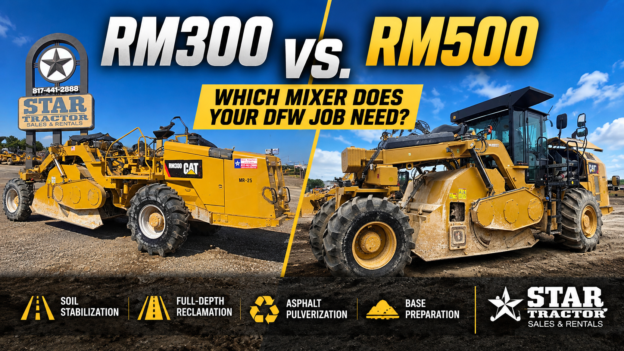
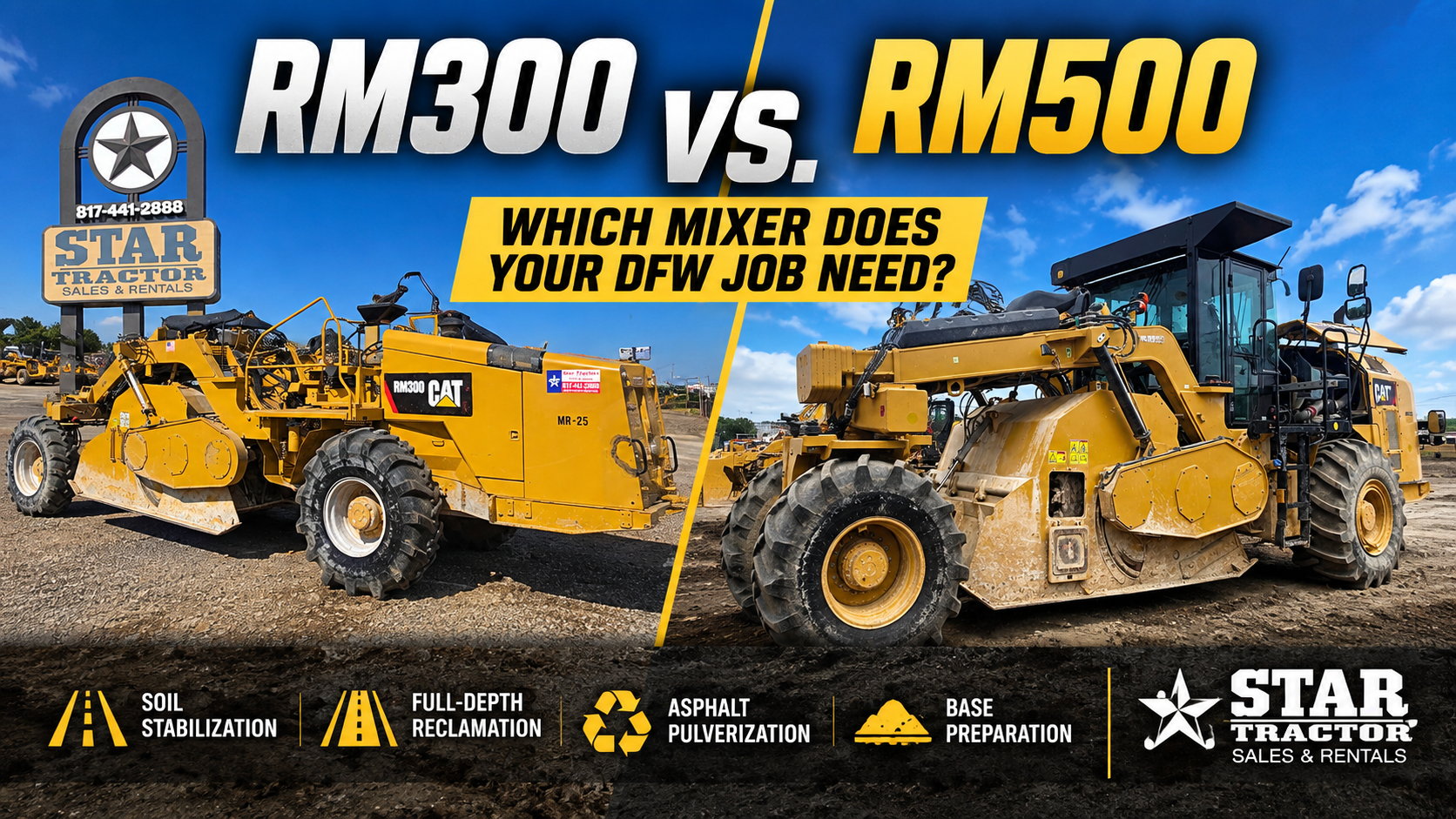
CAT RM300 vs. RM500 Rental in DFW | Which Soil Stabilizer Do You Need?

If you’re planning a soil stabilization, road reclamation, asphalt pulverization, or base preparation project in Dallas-Fort Worth, choosing the right mixer/reclaimer can have a big impact on production.

Two machines contractors may consider are the Caterpillar RM300 and Caterpillar RM500.

Both are serious machines. But bigger horsepower doesn’t automatically mean it’s the right choice for every job.

At Star Tractor Ltd. in Fort Worth, we rent heavy equipment throughout the Dallas-Fort Worth Metroplex, including CAT RM300 mixers and a CAT RM500. Here’s how I’d look at choosing between them.

What Does a CAT RM300 or RM500 Do?

These machines are commonly used for work including:

  • Soil stabilization
  • Full-depth reclamation
  • Asphalt pulverization
  • Base preparation
  • Road reconstruction
  • Site development
  • Mixing lime, cement, or other additives into existing material

For contractors, the real advantage is being able to process and improve existing material right on the jobsite.

Instead of looking only at the model number, I recommend starting with the project itself: What are you mixing? How deep are you cutting? How much material needs to be processed? And what production do you need each day?

CAT RM300: Versatility for DFW Soil Stabilization Projects

The CAT RM300 is a machine I would consider for a wide range of stabilization and reclamation applications.

With approximately 350 gross horsepower, a 96-inch mixing width, and configurations capable of mixing to depths up to approximately 20 inches, the RM300 gives contractors plenty of capability without automatically moving into a larger machine.

That can make it a good option for projects such as commercial site development, subdivision work, road construction, parking areas, building pads and other North Texas stabilization applications.

The important thing isn’t simply whether an RM300 can do the work.

It’s whether it can achieve the production your project requires.

CAT RM500: More Horsepower When Production Matters

The CAT RM500 steps things up considerably in horsepower.

Depending on the specific model and configuration, the RM500 family offers roughly 540-plus horsepower, while maintaining approximately the same 96-inch mixing width.

That distinction is important.

Moving from an RM300 to an RM500 isn’t necessarily about making a wider pass. It’s about having more power available to process material.

On larger projects, tougher material, deeper working conditions, or jobs with aggressive production schedules, that additional horsepower can become valuable.

If your crew needs to process a significant amount of material every day, production can matter more than simply getting the lowest-cost machine onto the project.

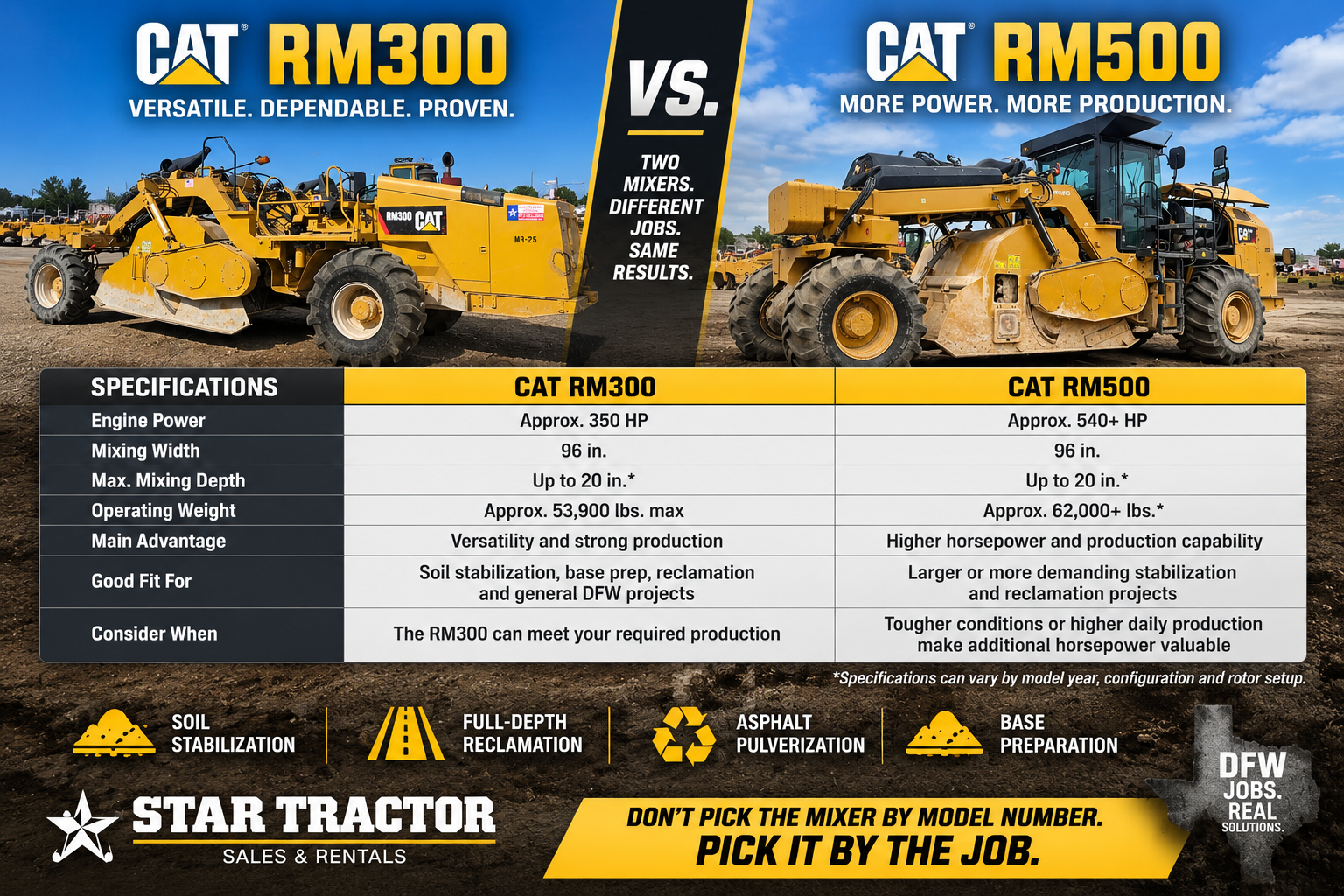
CAT RM300 vs. RM500 Comparison

FeatureCAT RM300CAT RM500
Engine PowerApprox. 350 HPApprox. 540+ HP*
Mixing WidthApprox. 96 in.Approx. 96 in.
Maximum Mixing DepthUp to approx. 20 in.*Up to approx. 20 in.*
Main AdvantageVersatility and strong productionMore horsepower and production capability
Consider It ForGeneral stabilization and reclamationMore demanding/high-production projects

*Specifications vary by model year, machine configuration and rotor setup. Always verify the specifications of the individual rental machine for your application.

Which Mixer Should You Rent?

I wouldn’t make that decision based on horsepower alone.

Before choosing an RM300 rental or RM500 rental in DFW, I’d look at five things:

  1. Material — What type of soil, base or pavement are you processing?
  2. Depth — How deep does the project require you to work?
  3. Total quantity — How much material needs to be processed?
  4. Daily production — How much work needs to get done per shift?
  5. Schedule — How much pressure is there to keep the project moving?

If the RM300 comfortably meets those requirements, stepping up to an RM500 may not be necessary.

But if you’re dealing with tougher conditions or need higher production, that’s where the additional horsepower of the RM500 deserves consideration.

Why Rent a Soil Stabilizer Instead of Buying One?

Mixers and reclaimers are specialized pieces of equipment.

Some contractors may keep them working constantly. Others need one for a particular phase of a project and then may not need another for months.

That’s one reason renting a soil stabilizer in DFW can make sense.

You can bring the machine onto the job when you need it without tying up capital in specialized equipment that could sit between projects.

Rental can also make sense when you unexpectedly pick up another stabilization project, need additional production alongside equipment you already own, or need to replace a machine that’s temporarily down.

CAT RM300 and RM500 Rentals in Dallas-Fort Worth

Star Tractor is a family-owned heavy-equipment company located on Equipment Row in Fort Worth, Texas. We’ve been in business since 2002 and maintain a fleet of more than 100 machines.

We rent heavy equipment throughout the Dallas-Fort Worth Metroplex and sell equipment nationwide and worldwide.

Our rental machines go through a thorough inspection after every rental. If something needs attention, we want to address it before that machine goes back to another contractor.

For contractors looking for a CAT RM300 rental in Dallas, Fort Worth, or the surrounding DFW area, we have multiple RM300 mixers in the rental fleet. We’ve also added a CAT RM500 for contractors who need another option for larger or more demanding applications.

Need an RM300 or RM500 for a DFW Project?

Don’t pick the mixer by model number. Pick it by the job.

Tell me what you’re mixing, your required depth, the size of the project and the production you’re trying to achieve. We can talk through whether an RM300 or RM500 makes more sense.

If you have an upcoming soil stabilization, full-depth reclamation, asphalt pulverization or road construction project anywhere in the Dallas-Fort Worth Metroplex, give me a call.

Kevin Cook

Star Tractor Ltd.
817-733-3799
Caterpillar 320 Excavator vs. Deere 670GP Motor Grader: Which Machine Does Your DFW Project Need?

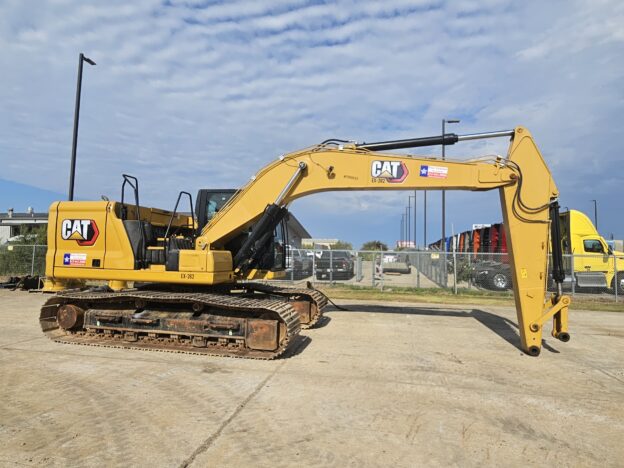
A Caterpillar 320 excavator and a Deere 670GP motor grader can both play important roles on a construction site, but they handle very different parts of the job.

The Cat 320 performs the digging and material-handling work. The Deere 670GP shapes the surface and brings the project closer to the required grade. Depending on the work, a contractor may need one machine—or both.

Here is a practical look at where each machine fits and what DFW contractors should consider before renting or buying equipment.

What Is a Caterpillar 320 Excavator Used For?

The Caterpillar 320 is a crawler excavator commonly used for excavation, utility work, site development and material handling. Its tracks allow it to work on rough or uneven ground while the boom, stick and bucket handle digging and loading operations.

Common Cat 320 applications include:

  • Digging foundations and building pads
  • Cutting trenches for water, sewer and utility lines
  • Loading dirt or demolition material into trucks
  • Removing unsuitable material
  • Excavating drainage structures and retention areas
  • Clearing and preparing construction sites
  • General earthmoving and demolition work

For contractors who need to dig below grade, move material from a fixed position or load trucks, an excavator is usually the right starting point.

What Is a Deere 670GP Motor Grader Used For?

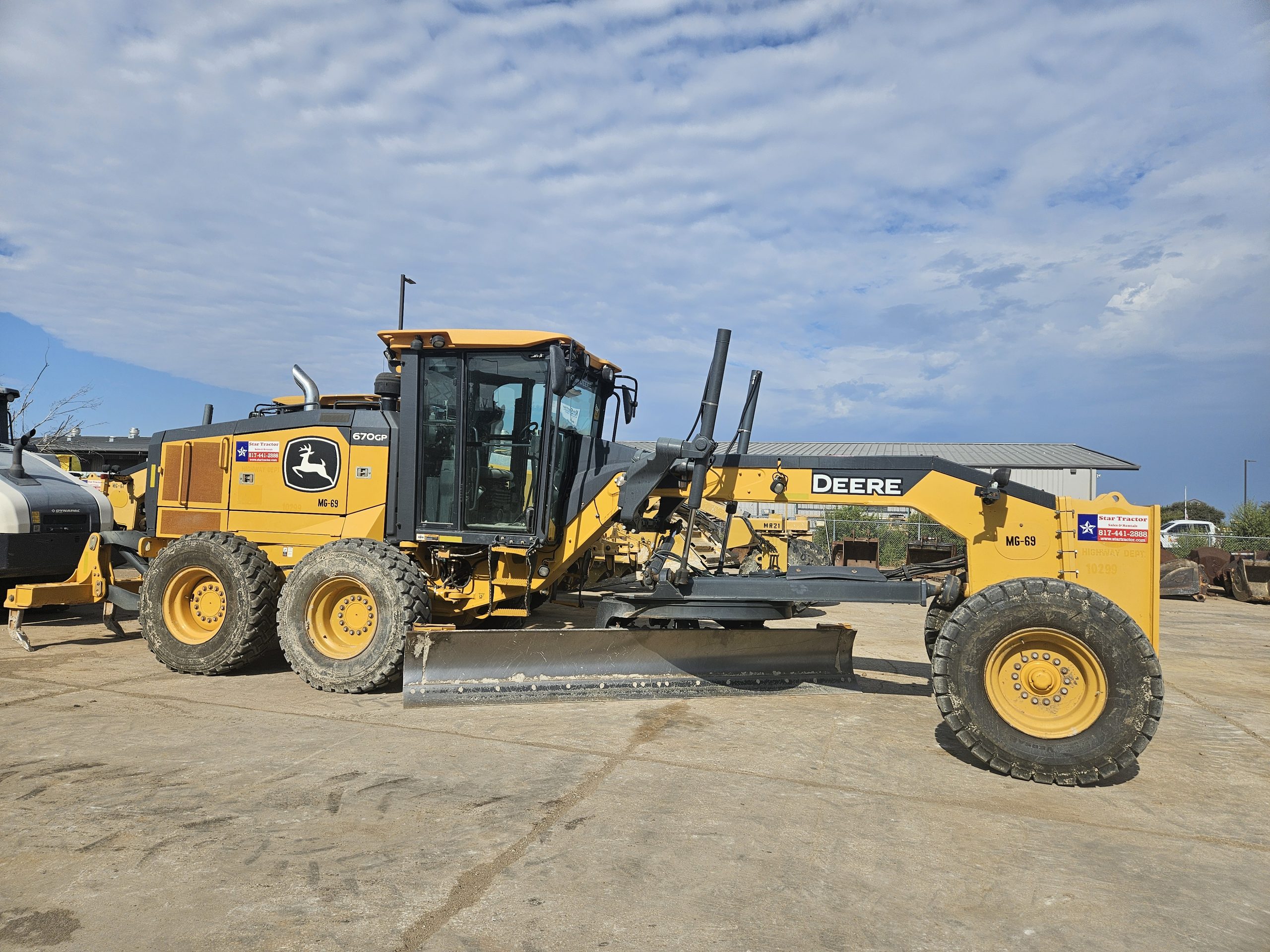
The Deere 670GP motor grader is built for shaping, spreading and finishing material. It can establish slopes, crown roads and produce a smoother, more accurate surface after the heavier excavation work has been completed.

Common Deere 670GP applications include:

  • Building and maintaining roads
  • Finish-grading commercial and industrial sites
  • Shaping building pads
  • Maintaining jobsite and haul roads
  • Spreading and leveling base material
  • Cutting drainage slopes and ditches
  • Preparing surfaces for paving or concrete

The “GP” designation identifies Deere’s Grade Pro configuration. Actual installed grade-control equipment can vary by machine, so contractors should always confirm the specific configuration before renting or purchasing.

The Main Difference Between an Excavator and a Motor Grader

The simplest way to separate these machines is to look at the work they perform.

The Caterpillar 320 excavator digs, removes and loads material. The Deere 670GP motor grader shapes, spreads and finishes it.

An excavator can cut a trench or remove unwanted soil, but it is not designed to produce the same broad, controlled finish as a motor grader. A grader can move and shape loose material across a surface, but it is not intended to perform deep excavation or efficiently load trucks.

Choosing the wrong machine can reduce production, increase operating time and make it harder to achieve the required result.

When a Project May Need Both Machines

Many earthmoving and site-development projects require an excavator and a motor grader at different stages.

For example, the Cat 320 may first be used to:

  • Excavate utilities
  • Remove unsuitable soil
  • Dig drainage areas
  • Load excess material into articulated trucks

The Deere 670GP can then be used to:

  • Spread replacement material
  • Shape the subgrade
  • Build slopes and drainage
  • Maintain access roads
  • Prepare the surface for the next construction phase

This combination can be useful on roadwork, commercial site development, utility projects, subdivisions and large building-pad jobs throughout the Dallas-Fort Worth area.

Questions to Ask Before Choosing a Machine

Before deciding what equipment belongs on the job, consider these questions:

Does the work require digging below grade?

If the project involves trenches, foundations, drainage structures or removing deep material, the Cat 320 will likely be the better choice.

Does the surface need to be shaped or finished?

If the goal is to establish elevation, create a road crown, shape a pad or prepare a smooth surface, the Deere 670GP is likely the more appropriate machine.

Will material need to be loaded into trucks?

An excavator is built to dig and load material. If dirt must be removed from the site, consider the entire production setup—including the excavator, trucks and disposal location.

What type of material is on the job?

Soil conditions affect machine selection and production. Wet ground, rock, compacted material and loose fill can each require a different approach.

How much work must be completed?

A machine should fit the size, schedule and production requirements of the project. The right equipment is not simply the largest available machine—it is the machine that can perform the work efficiently.

Do you need the machine temporarily?

If the equipment is needed for one project, a specific phase or a temporary increase in workload, renting may make more sense than purchasing.

Renting Heavy Equipment in DFW

Renting gives contractors the flexibility to add equipment when workloads increase, replace a machine that is down or handle a job that requires equipment they do not regularly own.

It may be a practical option when:

  • A new project creates a temporary equipment need
  • A contractor wants to avoid tying up capital
  • A particular machine is only needed for one phase
  • An existing machine is being repaired
  • The schedule requires additional production

Rental availability can change as machines leave for jobs and return to the yard, so it is worth checking early when a project is being scheduled.

Star Tractor rents heavy equipment throughout the Dallas-Fort Worth Metroplex. Every rental machine receives a thorough inspection after every rental—no shortcuts.

Buying Equipment for Longer-Term Needs

If a contractor expects to use a machine regularly and has enough work to keep it productive, purchasing may be the better long-term decision.

Buyers should evaluate:

  • Machine hours
  • Maintenance history
  • Overall condition
  • Undercarriage or tire condition
  • Attachments and configuration
  • Technology installed on the machine
  • Transportation requirements
  • Expected utilization

Star Tractor sells heavy equipment nationwide and worldwide. Specific hours, attachments, condition and pricing should always be confirmed for the individual machine being considered.

Which Machine Is Right for Your Project?

Choose the Caterpillar 320 when the job primarily requires digging, trenching, loading or material removal.

Choose the Deere 670GP when the work primarily involves shaping roads, building pads, spreading material or finish grading.

If the project includes major excavation followed by surface preparation, the best answer may be both.

The right decision depends on what material must be moved, how accurately the site must be graded, how long the equipment is needed and what other machines are already working on the project.

Need help matching equipment to your next DFW project?

Call me at 817-733-3799.

Kevin Cook
Star Tractor Ltd.

Rent Caterpillar Mixers

Ultimate Caterpillar RM300 Rental in DFW for Soil Stabilizers

Rental options in North Texas

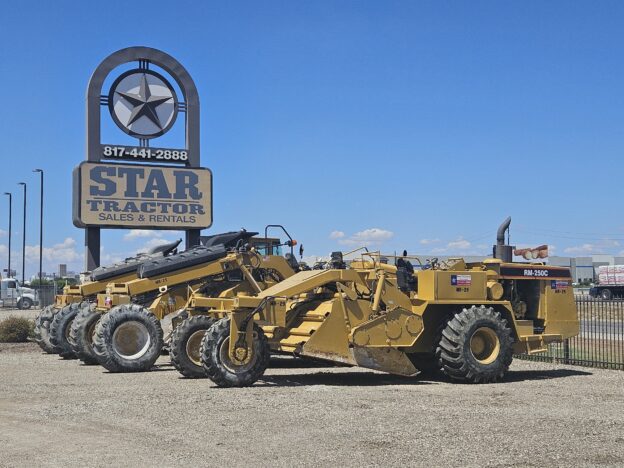
Additionally, for soil stabilization, road reclamation, or site-development projects in North Texas, Star Tractor offers Caterpillar RM300 mixers for rent.

They are available for rent across the Dallas–Fort Worth Metroplex.

Additionally, the caterpillar rm300 mixers are a specialized tool that not every contractor needs in the fleet year-round.

However, when stabilization or reclamation work is needed, access to the right equipment can boost production.

That’s where renting an RM300 can make sense.

What Is a Caterpillar RM300 Used For?

The Caterpillar RM300 is a soil stabilizer/reclaimer designed to process and mix material in place.

Depending on the project and specifications, contractors may use this type of machine for:

  • Soil stabilization
  • Full-depth reclamation
  • Road rehabilitation
  • Subgrade improvement
  • Base preparation
  • Site-development work
  • Mixing existing material with lime, cement, or other stabilizing agents

For highway, road, civil, utility, commercial development, and large site-work contractors, processing existing material in place can be important.

Additionally, it helps keep a project moving efficiently.

Caterpillar RM300 for Soil Stabilization

North Texas contractors know that soil conditions can create challenges long before the finished road, building pad, parking lot, or development begins taking shape.

When project specifications call for soil stabilization, a reclaimer/mixer can be used to thoroughly mix the existing material with the specified stabilizing agent.

The RM300 is built specifically for this type of demanding work.

Rather than looking at the machine as simply another piece of heavy equipment, contractors should think about what it can do for the overall operation: process material and keep stabilization work moving so the crews behind it can continue making progress.

Using an RM300 for Road Reclamation

Additionally, road rehabilitation is another application where machines like the Caterpillar RM300 come into play.

Full-depth reclamation can allow existing roadway material to become part of the reconstructed base rather than treating everything as material that must automatically be removed and replaced.

The exact process depends on the engineering specifications and project requirements, but the ability to reclaim and process existing material in place can provide contractors with another option when tackling roadway rehabilitation projects.

That makes RM300s especially relevant for contractors involved in road, highway, municipal, civil, and infrastructure construction throughout DFW and North Texas.

Why Rent a Caterpillar RM300?

A soil stabilizer/reclaimer is a specialized piece of equipment.

If stabilization isn’t part of your everyday workload, purchasing a machine may not make sense for every operation.

Renting gives contractors another option.

You may need an RM300 because you:

  • Won a project requiring stabilization or reclamation
  • Need additional production on an existing job
  • Have multiple projects running simultaneously
  • Need another machine temporarily
  • Don’t want to own a specialized machine that may sit between projects

The important thing is having access to the equipment when the work is ready.

Caterpillar RM300 Rentals in Dallas-Fort Worth

Star Tractor rents heavy equipment throughout the Dallas-Fort Worth Metroplex.

Additionally, we have caterpillar rm300 mixers available for rent.

We’re located in Fort Worth, Texas, right on Equipment Row, and we’ve been in the heavy-equipment business since 2002.

One thing I think is especially important when you’re renting a machine is knowing how that equipment has been treated between jobs.

At Star Tractor, every rental machine is thoroughly inspected after every rental.

Whether a machine was gone for a short rental or spent an extended period on a project, it goes through our inspection process when it comes back. When something needs to be repaired, we address it properly.

No shortcuts.

Our goal is straightforward: provide contractors with dependable late-model equipment and responsive service so they can concentrate on getting their work done.

Planning a DFW Stabilization Project?

Don’t wait until your crew is ready to start mixing material before figuring out where you’re going to get the machine.

If you’re bidding or planning a project involving soil stabilization, road reclamation, base work, or site development in the Dallas-Fort Worth area, it’s worth checking RM300 rental availability ahead of time.

If your project is already underway, you may need another mixer to increase production.

Additionally, call me and let’s see what we can do.

Need an RM300? Call Me.

We currently have Caterpillar RM300 mixers available for rent in the DFW Metroplex.

If you need specifications, rental information, or want to discuss whether we have an RM300 that fits your upcoming project, give me a call.

Call me at 817-733-3799.

Kevin Cook
Star Tractor Ltd.
Fort Worth, Texas

Rent Heavy Equipment from Star Tractor

The Complete Pre-Rental Guide: Making the Most of Your Heavy Equipment Rental

Renting heavy equipment can be a smart financial decision for your construction or landscaping project, but success lies in proper preparation. Here’s your comprehensive guide to ensuring a smooth, efficient rental experience.

Know What You Need Before You Rent

First things first: get crystal clear on your project requirements. What exactly are you building or demolishing? How long will you need the equipment? Understanding these basics helps you avoid renting more machine than you need—or worse, not enough.

Consider:

  • Specific tasks you’ll be performing (digging, lifting, grading)
  • Project timeline and rental duration
  • Site conditions and access requirements
  • Required equipment capacity and size

Choose the Right Equipment

Not all machines are created equal. A skid steer might be perfect for one job while an excavator is essential for another. Research your options and match the equipment to your specific needs:

  • Compare machine capacities and limitations
  • Consider attachment options that could increase versatility
  • Factor in site access and space constraints
  • Think about operator experience levels

Plan Ahead for Availability

Here’s a pro tip: popular equipment often books up fast, especially during peak construction seasons. Book your rental well in advance, and always have a backup plan. When making your reservation, nail down these details:

  • Exact rental period
  • Delivery or pickup arrangements
  • Required attachments or accessories
  • Backup dates if needed

Inspection Is Critical

Before accepting any piece of equipment, conduct a thorough inspection. This isn’t just about being picky—it’s about protecting yourself and ensuring you have a reliable machine for your project.

Check for:

  • Visible damage or wear
  • Proper fluid levels
  • Working controls and safety features
  • Tire or track condition
  • Hydraulic system integrity

Understand the Fine Print

Take time to review your rental agreement carefully. Pay special attention to:

  • Rental rates and additional fees
  • Insurance requirements and coverage options
  • Return conditions and cleaning requirements
  • Fuel policies
  • Late return penalties

Site Preparation Matters

Before your equipment arrives, make sure your site is ready:

  • Clear the work area of obstacles
  • Mark underground utilities
  • Ensure adequate access for delivery
  • Designate equipment storage areas
  • Plan for fueling and maintenance

Safety First

Even if you’re experienced with heavy equipment, review safety protocols:

  • Verify operator qualifications
  • Review equipment-specific safety guidelines
  • Ensure proper protective equipment is available
  • Plan for emergency situations
  • Know who to contact if problems arise

Stay Connected

Keep your rental provider’s contact information readily available. For our customers, you can reach Kevin at 817-733-3799 for:

  • Technical support
  • Rental extensions
  • Maintenance issues
  • General questions

The Bottom Line

Success with rented equipment comes down to proper planning and preparation. By following this guide, you’ll be well-positioned to maximize your rental investment and complete your project efficiently.

Remember, we’re here to help you make the most of your equipment rental. Whether you need advice on choosing the right machine or want to discuss specific project requirements, give us a call at 817-733-3799. We’ll help you get the right equipment for your job and ensure you have everything you need for a successful rental experience.

Want to get started with your equipment rental? Contact us today, and let’s make your project a success.

Rent Heavy Equipment from Star Tractor

Essential Safety Guide: Operating Rented Heavy Equipment Like a Pro

Getting behind the controls of heavy equipment can be intimidating, but with the right preparation and knowledge, you can operate these powerful machines safely and effectively. Whether you’re tackling your first construction project or looking to brush up on best practices, here’s your comprehensive guide to operating rented equipment safely.

Start with the Basics: Know Your Machine

Before you climb into that operator’s seat, take time to understand your equipment. Every machine has its quirks and features, and familiarizing yourself with them is crucial. Read through the operator’s manual, and don’t hesitate to ask for a demonstration from your rental provider. Understanding the basics of your machine’s operation isn’t just about efficiency—it’s about safety.

Pre-Operation Checklist: Your Safety Foundation

Think of this as your equipment’s health check. Before starting any work, inspect:

  • Hydraulic systems for leaks or damage
  • Control responsiveness
  • Tire or track condition
  • Fluid levels (oil, coolant, hydraulic fluid)
  • Safety features and warning systems

This quick inspection can prevent accidents and save you valuable time down the line.

Gear Up for Safety

Never underestimate the importance of proper safety gear. Your essential equipment checklist should include:

  • A well-fitting hard hat
  • Safety glasses with side protection
  • Steel-toed boots
  • High-visibility clothing
  • Work gloves
  • Hearing protection when needed

Remember, this gear isn’t optional—it’s your first line of defense against workplace hazards.

Operating Tips for Success

Success in heavy equipment operation comes down to following proven practices:

Start slow and steady. If you’re new to the equipment, find an open area to practice basic maneuvers. Get comfortable with the controls before tackling more challenging tasks.

Stay aware of your surroundings. Construction sites are dynamic environments with constantly moving people and equipment. Maintain awareness of what’s happening around you at all times.

Respect machine limits. Every piece of equipment has specific capacity limits. Exceeding them isn’t just dangerous—it can damage the equipment and your reputation.

Take regular breaks. Operating heavy equipment requires intense focus. Schedule regular breaks to stay alert and maintain good judgment.

Emergency Preparedness

Even with perfect preparation, emergencies can happen. Know these crucial elements:

  • How to quickly but safely shut down your equipment
  • Emergency exit procedures
  • Who to contact if something goes wrong
  • Location of first aid supplies and fire extinguishers

Keep emergency contact numbers readily available, including your rental provider’s support line.

Maintaining Focus and Energy

Operating heavy equipment isn’t a task you can do on autopilot. Stay sharp by:

  • Getting adequate rest before operating equipment
  • Staying hydrated and taking regular breaks
  • Avoiding distractions like mobile phones while operating
  • Maintaining clear communication with ground crews

Proper Equipment Care

Treating rental equipment with care ensures both safety and reliability:

  • Keep the equipment clean
  • Report any operational issues promptly
  • Follow maintenance schedules
  • Document any incidents or concerns

When you’re finished with the equipment, return it in the same condition you received it. Clean off debris, refuel if required, and report any issues you encountered.

The Path to Expertise

Becoming proficient with heavy equipment takes time and practice. Don’t be afraid to:

  • Ask questions when unsure
  • Request additional training
  • Learn from experienced operators
  • Take advantage of available resources and guidance

Ready to Get Started?

Operating heavy equipment safely requires attention to detail and a commitment to best practices. By following these guidelines, you’ll be well on your way to becoming a skilled and safety-conscious operator.

Need expert guidance on equipment rental or have questions about specific machinery? Give us a call at 817-733-3799. Our team is here to ensure you have the knowledge and support you need for a successful project.

Remember: Safety isn’t just about following rules—it’s about creating a culture of responsibility that protects you, your team, and your project’s success. Start with these fundamentals, and you’ll build a strong foundation for safe equipment operation.

How to Choose the Perfect Heavy Equipment for Your Construction Project

Selecting the right heavy equipment can make or break your construction project’s success. Whether you’re breaking ground on a new development or tackling a major landscaping job, the machinery you choose impacts everything from timeline to budget. Here’s your comprehensive guide to making the right equipment decisions.

Start with Your Project Basics

Before you even look at equipment options, take a hard look at your project’s requirements. What exactly are you building or demolishing? How much material needs moving? Are you working with challenging terrain or tight spaces? These fundamental questions shape your equipment needs.

For example, if you’re working on an urban renovation project with limited access, you’ll need compact equipment that can navigate tight corners. On the other hand, a large-scale excavation project might require heavy-duty machinery with significant power and reach.

Understanding Equipment Types

Different jobs demand different tools. Here’s what you need to know about the workhorses of construction:

Excavators are your go-to for serious digging operations. They excel at everything from foundation work to trench digging, offering precision and power in one package. Their rotating cab and articulating arm provide flexibility that’s hard to match with other equipment.

Skid steer loaders are the Swiss Army knives of construction equipment. Their compact size and impressive maneuverability make them perfect for smaller job sites, while their wide range of attachments means one machine can handle multiple tasks – from concrete breaking to material transport.

Backhoes combine the digging capacity of an excavator with the loading abilities of a front-end loader. They’re particularly valuable for projects that require both earthmoving and material handling, saving you from renting multiple machines.

The Rent vs. Buy Decision

Here’s a truth many contractors learn the hard way: owning equipment isn’t always the best choice. Renting often makes more sense, especially for specialized machinery or equipment you’ll only use occasionally. Consider renting when:

  • Your project is short-term
  • You need specialized equipment
  • You want to avoid maintenance headaches
  • Cash flow is a concern
  • You prefer having access to the latest models

However, if you’re consistently using certain equipment or have multiple long-term projects lined up, purchasing might be the better investment. Just remember to factor in maintenance costs, storage, and depreciation.

Safety and Efficiency Considerations

Equipment selection isn’t just about capability – it’s about safety and efficiency too. Modern machinery comes with various safety features and efficiency improvements that can significantly impact your project:

  • Improved visibility systems
  • Better fuel efficiency
  • Enhanced operator comfort
  • Advanced safety mechanisms
  • Improved control systems

Make sure your chosen equipment matches your operators’ skill levels. Even the most advanced machine won’t help if your team isn’t comfortable using it.

Making the Final Decision

When you’re ready to choose your equipment, consider these final factors:

  1. Transportation logistics – how will you get the equipment to your site?
  2. Maintenance requirements – what kind of upkeep will be needed?
  3. Fuel efficiency – how much will it cost to operate?
  4. Versatility – can the equipment handle multiple tasks?
  5. Support and service availability – what happens if something goes wrong?

Remember, the cheapest option isn’t always the most cost-effective. Consider the total cost of operation, including fuel, maintenance, and operator training.

Get Expert Help

Still unsure about what equipment best suits your needs? That’s perfectly normal – construction equipment selection can be complex. Consider reaching out to equipment rental specialists who can provide expert guidance based on your specific project requirements.

Our team specializes in matching contractors with the right equipment for their jobs. We understand that every project is unique and requires careful consideration of multiple factors. Give us a call at 817-733-3799, and let’s discuss your equipment needs. We’ll help you make a choice that maximizes your efficiency while minimizing costs.

Remember, the right equipment choice can mean the difference between a project that runs smoothly and one that faces constant delays. Take the time to evaluate your needs carefully – it’s an investment that pays off in project success.

Want to learn more about specific equipment options or get a quote for your next project? Contact Kevin at 817-733-3799. We’re here to help you make the best choice for your construction needs.

Enhance Your Project with Star Tractor’s Rental: The Komatsu PC138 Excavator

Star Tractor’s Komatsu PC138 Excavator: The Perfect Rental for Your Project Needs

Are you in the market for a top-tier excavator rental? Look no further! Star Tractor is thrilled to announce the availability of the Komatsu PC138 Excavator for rent. This blog post will delve into why the Komatsu PC138 is an ideal choice for a variety of construction and excavation projects, and how Star Tractor is poised to meet your equipment rental needs.

Unmatched Performance and Features

The Komatsu PC138 Excavator is a powerhouse in the world of construction equipment. Known for its robust performance and reliability, this excavator is a perfect fit for both urban and rural projects. Let’s break down what makes the Komatsu PC138 stand out:

  1. Compact and Powerful: Ideal for jobs in confined spaces, the PC138 offers the power of a larger excavator with the agility of a smaller one. Its compact size makes it perfect for urban projects, where space is often limited.
  2. Advanced Hydraulics: The state-of-the-art hydraulic system ensures efficient and precise operations. Whether it’s digging, lifting, or loading, the PC138 offers smooth and responsive control.
  3. Eco-Friendly Engine: The Komatsu PC138 is equipped with a low-emission engine. This not only reduces your carbon footprint but also complies with stringent environmental regulations.
  4. Comfortable Operator Environment: Long hours on the job site? No problem! The PC138 features a spacious and comfortable cabin with excellent visibility and ergonomic controls, reducing operator fatigue.
  5. Enhanced Safety Features: Safety is paramount in any project, and the Komatsu PC138 excels in this area. With its robust construction and advanced safety features, operators can work with peace of mind.

Why Rent from Star Tractor?

Choosing Star Tractor for your Komatsu PC138 rental comes with numerous advantages:

  • Flexible Rental Terms: Whether you need the excavator for a short-term project or a longer period, we offer flexible rental plans to suit your specific needs.
  • Competitive Pricing: We believe in providing quality equipment at competitive prices, ensuring you get the best value for your money.
  • Expert Support: Our team of experts is always on hand to provide advice and support, ensuring you get the most out of your rental.
  • Well-Maintained Equipment: We take pride in maintaining our equipment to the highest standards, ensuring reliability and performance when you need it most.

Perfect for a Range of Applications

The Komatsu PC138 Excavator is versatile and can be used for various applications, including but not limited to:

  • Urban construction and demolition
  • Landscaping and property development
  • Utility work (such as laying pipes and cables)
  • Mining and quarrying
  • General excavation work

Conclusion

The Komatsu PC138 Excavator from Star Tractor represents the perfect blend of power, precision, and efficiency. It’s an excellent choice for contractors, construction companies, and anyone in need of a high-quality excavator for their next project. With our flexible rental options, competitive pricing, and dedicated support, Star Tractor is your go-to partner for all your heavy equipment needs. Contact us today to learn more about renting the Komatsu PC138 and take the first step towards enhancing your project’s efficiency and productivity.

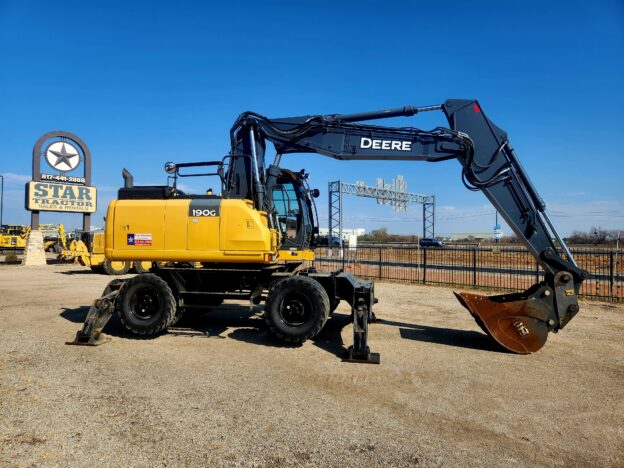
John Deere 190G W Wheel Loader

Exciting New Arrival! Unbeatable Offer on a 2019 JOHN DEERE 190GW Rubber Tired Excavator!

If you’re in the market for a construction powerhouse, look no further. We’re thrilled to introduce an incredible deal on a 2019 JOHN DEERE 190GW Rubber Tired Excavator that’s set to transform your projects. This machine is driven by a dependable John Deere diesel engine, making it ready to conquer any task with ease. Plus, with EROPS, air conditioning, and heating, it ensures your comfort, even during those long workdays.

Highlighted Features:

  • 2-piece boom for added versatility
  • 9ft stick for extended reach
  • Combination hydraulics for superior performance
  • 4 hydraulic outriggers for unmatched stability
  • Swift hydraulic coupler for quick attachments
  • Comes complete with a digging bucket
  • Mere 907 hours of usage, indicating it’s nearly new

But there’s more! This 2019 JOHN DEERE 190GW also comes with a Power Train & Hydraulic Warranty, which is valid until 6/16/25 or 5,000 hours. This warranty provides you with peace of mind and exceptional value, making it an even smarter investment.

Whether you’re an expert in construction, excavation, or any heavy-duty industry, this excavator is the perfect companion for efficient project completion. Don’t miss out on this opportunity to own a top-tier excavator with an extended warranty.

Price: $205,000.00

Contact: 817-733-3799

Make the call today to get more information and schedule a viewing. Get ready to elevate your projects with the unmatched power and reliability of JOHN DEERE!

#JohnDeereExcavator #HeavyDutyMachinery #BuiltToLast #ConstructionEquipment #ExcavatorForSale #WheeledExcavator #ReliabilityMatters #PowerfulPerformance #InvestInQuality #ProjectSuccess

Unveiling Premium Options: Star Tractor Dallas Fort Worth Offers Caterpillar SS-250 and RM300 Mixers and Reclaimers for Rent

In the dynamic realm of construction and heavy equipment, Star Tractor Dallas Fort Worth has emerged as a beacon of innovation and reliability. As an industry leader, they have taken a strategic step to enhance their service offerings by making available the Caterpillar SS-250 and RM300 Mixers and Reclaimers for rent. This move not only solidifies their commitment to excellence but also underscores their dedication to meeting the diverse needs of their clients.

Caterpillar Excellence: A Proven Legacy

Caterpillar, a name synonymous with dependability and technological prowess, has earned a spot at the forefront of the construction equipment domain. With a rich history of producing equipment that excels in durability, performance, and advanced features, Caterpillar is a trusted choice for professionals seeking top-tier solutions.

The Caterpillar SS-250 and RM300 Mixers and Reclaimers epitomize this legacy, designed to tackle the intricate challenges of soil stabilization and asphalt reclamation—two crucial aspects of modern construction projects.

The Caterpillar SS-250: Power and Precision Now for Rent

The Caterpillar SS-250 Mixer, a work of engineering mastery, is now available for rent through Star Tractor. Customized for the demands of soil stabilization and construction projects, the SS-250 offers a range of features that have captivated industry professionals:

  • Advanced Mixing Technology: The SS-250 boasts an innovative twin-shaft pugmill design that ensures thorough and consistent mixing. When you choose the SS-250 for rent, you’re embracing technology that delivers uniformly blended materials, ultimately leading to stronger, longer-lasting surfaces.
  • Efficient Fuel Management: Caterpillar’s dedication to sustainability is apparent in the SS-250’s fuel-efficient design. By opting for this equipment for your projects, you not only ensure cost savings but also contribute to reducing your carbon footprint.
  • Operator Comfort and Safety: The SS-250 prioritizes operator comfort and safety with its spacious and ergonomic cabin. When you rent this equipment, you’re ensuring your team can work effectively and efficiently for extended periods.
  • Precision Control: The SS-250’s advanced control systems give you the power to fine-tune mixing parameters. This level of control guarantees that each project receives the attention and precision it deserves.

The Caterpillar RM300: A Sustainable Choice for Rent

The Caterpillar RM300 Reclaimer, a champion of sustainable construction practices, is now available for rent through Star Tractor. Reclaiming existing materials for reuse is not only environmentally friendly but also financially sound. When you opt for the RM300 for rent, you’re unlocking an array of benefits:

  • Versatile Reclamation: The RM300 excels at pulverizing asphalt pavements and base materials, transforming them into reusable materials. When you rent this equipment, you’re adopting a solution that minimizes waste and maximizes resource efficiency.
  • Environmental Stewardship: By choosing the RM300 for your projects, you actively participate in reducing the demand for new aggregates, thereby contributing to a greener construction process.
  • Optimized Efficiency: The RM300 is equipped with advanced engines and hydraulics, ensuring optimal power and efficiency for effective reclamation. Renting this equipment ensures that your projects stay on track and on time.
  • Tailored Adaptability: The RM300’s customizable settings empower you to tailor the reclamation process to your project’s unique requirements. This adaptability guarantees optimal outcomes every time.

Star Tractor’s Comprehensive Offering

Star Tractor Dallas Fort Worth’s decision to offer the Caterpillar SS-250 and RM300 Mixers and Reclaimers for rent is a testament to their dedication to delivering excellence. By making these cutting-edge machines accessible to their clients, they’re providing a unique opportunity to harness Caterpillar’s innovation and expertise for projects of all scales and complexities.

For construction professionals in the Dallas Fort Worth area, the availability of the Caterpillar SS-250 and RM300 for rent through Star Tractor opens doors to unprecedented possibilities. Whether your project requires soil stabilization, asphalt reclamation, or a combination of both, you now have the option to rent equipment that embodies excellence and performance.

The introduction of the Caterpillar SS-250 and RM300 Mixers and Reclaimers for rent by Star Tractor Dallas Fort Worth is a game-changer for the construction industry in the region. With these state-of-the-art machines at your disposal, you have the means to elevate your projects to new heights of efficiency, sustainability, and excellence. This strategic move by Star Tractor reflects their commitment to empowering their clients with premium equipment that ensures the successful execution of every construction endeavor.

817-733-3799

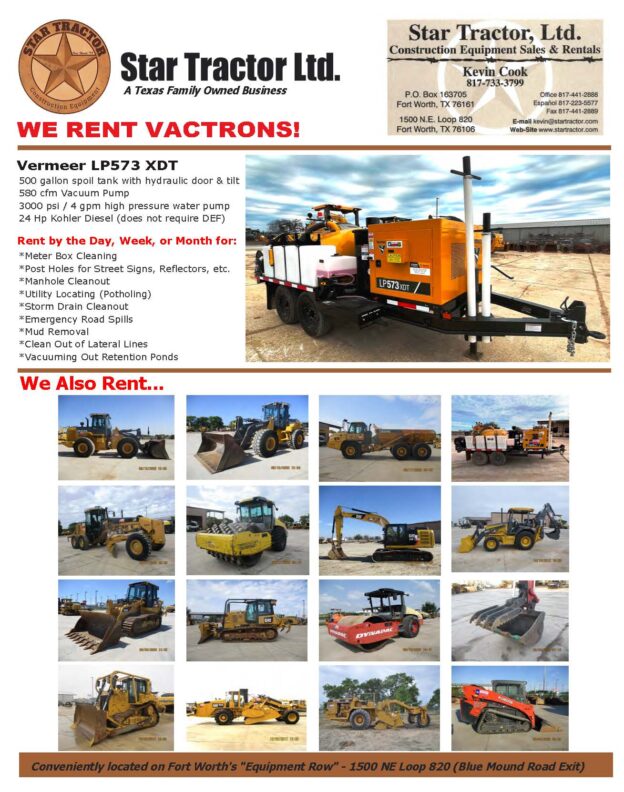
A Step-by-Step Guide to Operating a Vermeer LP573 XDT Vactron Trailer

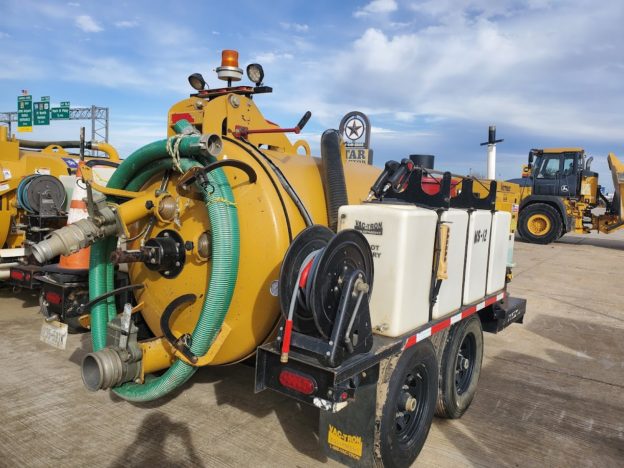
The Vermeer LP573 XDT Vactron Trailer is a powerful and versatile machine designed for vacuum excavation and other utility applications. Whether you’re a seasoned operator or a beginner, learning how to operate this equipment safely and efficiently is essential. In this step-by-step guide, we’ll take you through the process of operating the Vermeer LP573 XDT Vactron Trailer, ensuring a successful and productive experience.

Step 1: Familiarize Yourself with the Equipment

Before operating any machinery, it’s crucial to familiarize yourself with the equipment. Take a moment to study the operator’s manual provided by Vermeer thoroughly. Understand the different components, controls, safety features, and maintenance requirements. Ensure that you are wearing appropriate personal protective equipment (PPE), including safety glasses, hard hat, and work gloves.

Step 2: Perform a Pre-Operational Inspection

Safety should always be your top priority. Before starting the Vermeer LP573 XDT Vactron Trailer, conduct a pre-operational inspection to ensure it’s in good working condition. Check for any visible damage, leaks, or loose parts. Verify that all safety guards are in place and secure. Inspect the tires, hydraulic lines, and vacuum hoses for wear and tear. Confirm that the fuel and hydraulic fluid levels are adequate.

Step 3: Start the Engine

Once you’ve completed the pre-operational inspection, it’s time to start the engine. The Vermeer LP573 XDT Vactron Trailer typically features a user-friendly control panel. To start the engine, follow these general steps:

  1. Turn the key to the “ON” position.
  2. Check that the engine indicators (e.g., oil pressure, temperature, battery) show normal readings.
  3. Depress the brake pedal and engage the parking brake.
  4. Turn the key to the “START” position to crank the engine. Release the key once the engine starts.

Step 4: Operate the Vacuum Excavation System

The primary function of the Vermeer LP573 XDT Vactron Trailer is its vacuum excavation system. This system allows you to safely dig around buried utilities without damaging them. To operate the vacuum excavation system:

  1. Position the trailer: Park the Vactron Trailer on stable ground, close to the excavation site. Use wheel chocks if necessary to prevent any movement during operation.
  2. Engage the PTO (Power Take-Off): The vacuum pump is driven by the power take-off (PTO). Engage the PTO to activate the vacuum system.
  3. Control the boom and hose: The LP573 XDT model comes with an extendable boom and hose for reaching excavation points. Use the control levers to extend, retract, and position the boom and hose as needed.
  4. Start the vacuum: Activate the vacuum system and adjust the suction power as required using the control panel. Be cautious not to use excessive force that may damage underground utilities.

Step 5: Monitor the Debris Tank

The Vermeer LP573 XDT Vactron Trailer is equipped with a debris tank where excavated material is collected. Keep an eye on the debris tank’s fill level and empty it when necessary. Exceeding the tank’s capacity may lead to inefficiencies and could potentially damage the equipment.

Step 6: Shut Down the Equipment Properly

Once you’ve completed your excavation tasks or when taking a break, it’s essential to shut down the equipment properly:

  1. Disengage the PTO: Turn off the vacuum system by disengaging the power take-off.
  2. Release pressure: Before disconnecting hoses or performing any maintenance, release any pressure in the system to avoid sudden bursts of air.
  3. Turn off the engine: Allow the engine to idle for a few minutes to cool down, and then turn it off.

Step 7: Perform Post-Operational Checks

After shutting down the Vermeer LP573 XDT Vactron Trailer, conduct post-operational checks. Look for any signs of damage, leaks, or wear on the equipment. If any issues are identified, report them to the maintenance team for prompt repair.

Conclusion

Operating the Vermeer LP573 XDT Vactron Trailer can be a rewarding experience, but safety and proper usage are paramount. By following this step-by-step guide and the manufacturer’s instructions, you’ll be better equipped to handle the equipment safely and efficiently. Remember to perform regular maintenance and always prioritize safety during your excavation operations. Happy digging!